
Freezer-Friendly Beef Chili – Meal Prepping for Postpartum Moms
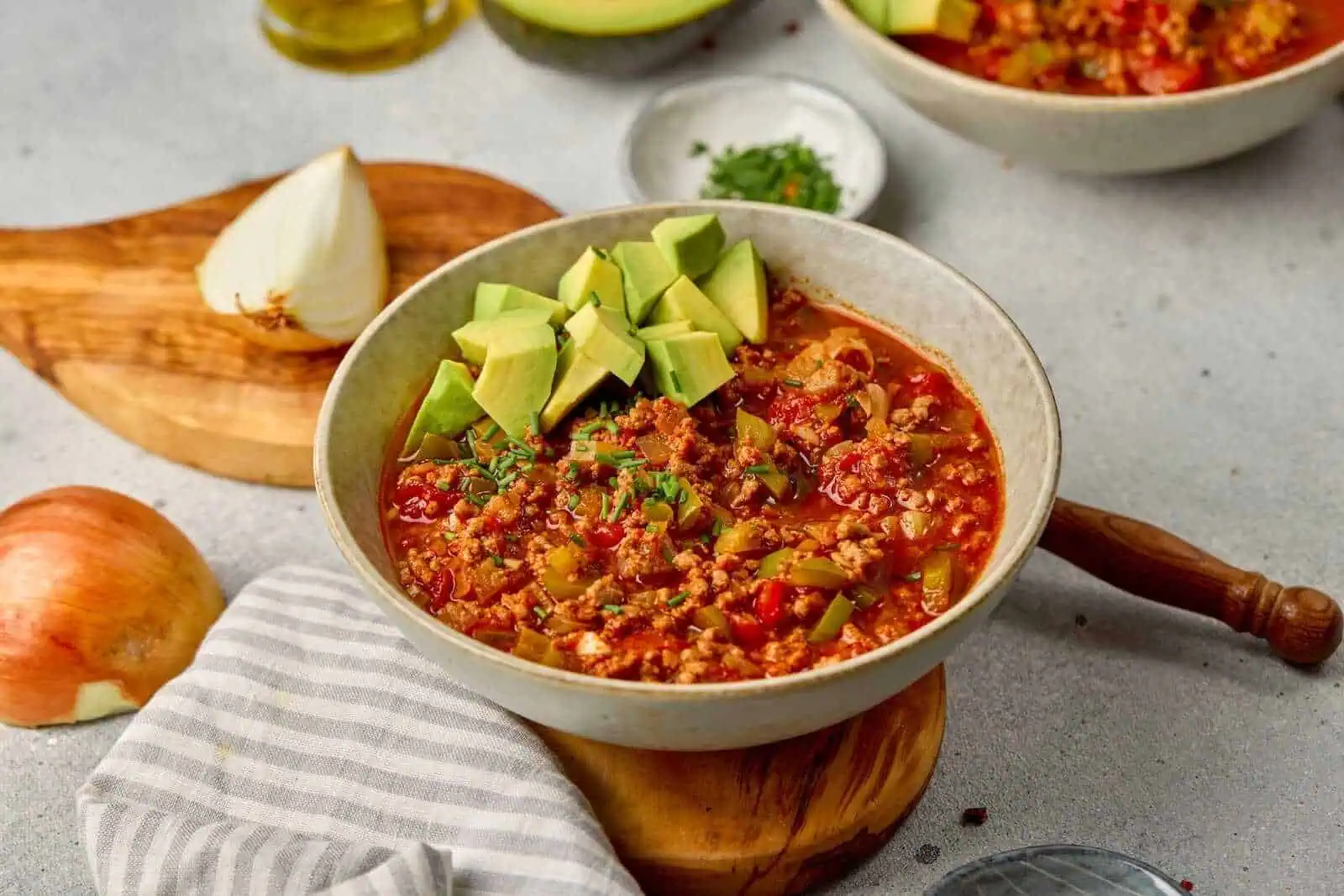
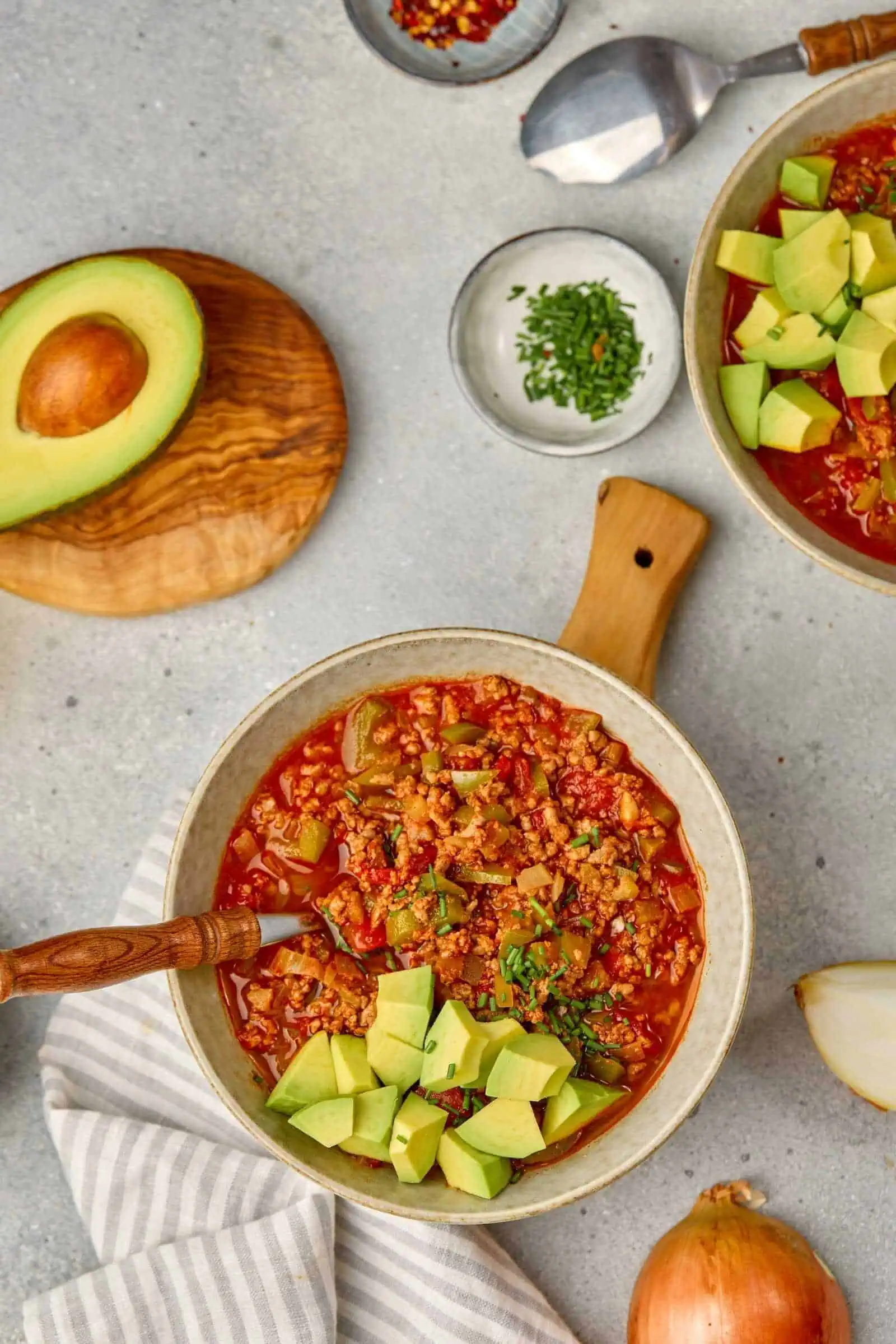
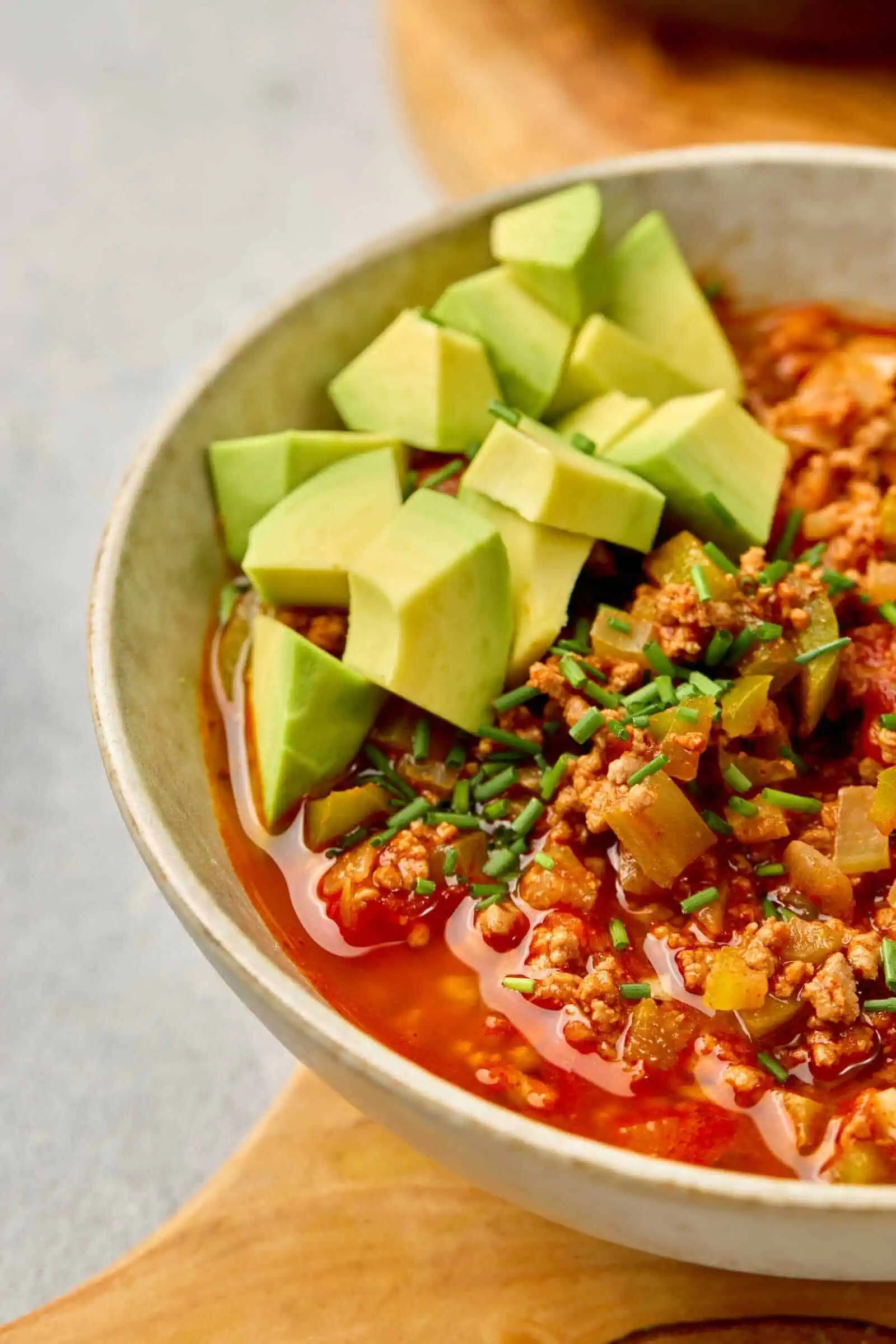
Welcoming a new baby brings joy—and a whirlwind of exhaustion, emotional shifts, and nonstop feeding. In those early days (weeks and months), one of the greatest gifts you can give yourself is prepared meals that are nourishing, convenient, and comforting. This freezer-friendly beef chili is exactly that: high in protein, packed with flavor (and veggies), and easy to make in bulk so you can thaw and reheat when life is busy.
I make this recipe often, even long after pregnancy and postpartum is done. It’s so easy and convenient to pull out of the freezer on a busy day when I don’t have time to shop for groceries or cook a fresh meal.
In this post, I’ll walk you through all the below points:
- Why this chili is a smart postpartum prep meal
- How to adapt this recipe to different types of protein
- The full ingredient list and step-by-step instructions
- Tips for batch cooking, freezing, thawing, and serving
- Nutritional considerations for postpartum recovery
- Variations, add-ons, and serving suggestions
Let’s get into it!
Why This Chili Is a Smart Postpartum Prep Meal
High Protein, Moderate Healthy Fats, Vegetables Included
After birth, your body needs building blocks to heal (uterine involution, tissue repair, recovery) and—if you are nursing—to produce milk. A chili that emphasizes protein, fiber, and veggies helps promote satiety, stable blood sugar, and nutrient density. By using grass-fed beef, you also introduce a slightly better fatty acid profile (more omega-3, conjugated linoleic acid) compared to conventional.
Freezer Friendly and Convenient
You can make a large pot, portion it into individual servings or family-size batches, and freeze. On those nights when you don’t have energy to cook, you just thaw and reheat. No thinking, no chopping, minimal effort.
Comfort Food with Digestive Ease
Chili is warm, hearty, and satisfying. Because this version is bean-free, it can be gentler for digestion in sensitive postpartum systems. Beans, while nutritious, can cause gas or bloating for some individuals, especially those recovering from a c-section or with shifts in gut motility.
Scalability and Flexibility
You can double, triple, or halve the recipe depending on how many mouths you’re feeding (or how many days you want to stock). You can also add or subtract veggies, spice levels, or liquids to suit your tastes or needs.
Budget-Friendly Ingredients
Ground beef (especially when bought in bulk, on sale, or in family packs) is cost-effective. You’re converting many ingredients into a high-impact, nutrient-dense meal that stretches.
*Note – Even when searching for grocery bargains, make sure to stick to quality meat and opt for grass-fed when available.


Adapting the Recipe to Alternate Protein Sources
While this version of the chili is designed with grass-fed ground beef, one of the best things about chili is its flexibility. Depending on your family’s dietary needs, budget, or what’s available at your local market, you can easily swap in other protein sources. Each option has its own unique nutritional profile and flavor, and all of them work well for freezer-friendly meal prep.
Ground Bison
- Leaner protein: Bison is naturally lean yet nutrient-dense, often with less fat than beef while still packing a good amount of protein.
- Rich flavor: It has a slightly sweeter, richer taste compared to beef, which makes the chili hearty and satisfying.
- Micronutrient boost: High in iron, zinc, and vitamin B12—nutrients especially supportive during postpartum recovery.
Ground Buffalo
- Similar to bison: Buffalo meat is very comparable to bison—lean, high in protein, and slightly sweeter than beef.
- Lower saturated fat: Typically has less fat than beef, making it a lighter choice while still providing filling protein.
- Sustainability factor: Buffalo farming often supports grass-based feeding practices, making it an eco-conscious choice in many regions.
Ground Chicken
- Light and mild: Ground chicken has a lighter flavor, which makes it a great base for those who prefer milder chili.
- Lower calorie option: It’s a lean protein that can help reduce the calorie content of the chili without sacrificing satiety.
- Versatile: Its neutral taste lets the spices and veggies really shine, giving you flexibility to adjust seasonings.
Ground Turkey
- Postpartum-friendly lean protein: Similar to chicken, ground turkey is lean but slightly richer in flavor.
- Great balance of fat and protein: Choosing a mix like 93/7 ground turkey ensures it’s not too dry while still being lighter than beef.
- Widely available and budget-friendly: Turkey is easy to find in most grocery stores and often comes at a lower price point, which makes it an economical choice for bulk freezer meal prep.
*Pro tip – If you’re using leaner meats like chicken or turkey, consider adding a splash of extra olive oil, ghee, or avocado oil to keep the chili moist and flavorful when reheating.

Nutritional Needs for Postpartum and Breastfeeding Women
Recovering from childbirth and, for many women, producing breast milk means your body has elevated nutritional demands. The foods you eat can play a vital role in how quickly you heal, how much energy you have, and even how well your baby thrives if you are nursing. While there’s no single “perfect diet,” focusing on key nutrients can make a world of difference.
Protein for Healing and Milk Production
Protein is the foundation of tissue repair, making it essential after birth. It supports wound healing (for perineal tears or C-section incisions), muscle recovery, and milk production. Aim to include protein at every meal—sources like beef, chicken, turkey, fish, eggs, and legumes are excellent. A hearty chili built around a quality protein source provides a reliable, freezer-friendly option.
Iron for Energy and Recovery
Blood loss during delivery can deplete iron stores. Low iron levels contribute to fatigue and even postpartum depression. Grass-fed beef and other red meats are rich in heme iron, which is easier for the body to absorb than plant-based forms. Pairing iron-rich foods with vitamin C sources (like bell peppers or tomatoes in chili) helps increase absorption.
Healthy Fats for Hormones and Baby’s Brain Development
Your body needs fat for hormone balance, energy, and brain health. If breastfeeding, fats in your diet contribute directly to your baby’s brain and nervous system development. Opt for sources like avocado, olive oil, fatty fish, nuts, seeds, and the natural fat in grass-fed meats. Adding avocado chunks or olive oil drizzles to chili is a simple way to support these needs.
Fiber for Digestion and Comfort
Constipation is common postpartum due to hormonal shifts, reduced mobility, and pain medications. Fiber-rich foods like vegetables, whole grains, beans (if tolerated), and fruits help restore digestive health. Chili’s vegetables and optional bean additions can naturally boost fiber intake.
Hydration and Electrolytes
Whether or not you’re breastfeeding, hydration is essential for recovery. For nursing moms, staying hydrated also helps maintain milk supply. Broth-based meals, soups, and chili provide fluids and electrolytes, complementing water intake. Bone broth in particular adds minerals like calcium, magnesium, and potassium.
Micronutrients that Matter Most
- Calcium: Supports bone health for both mom and baby.
- Vitamin D: Crucial for immunity, mood, and calcium absorption (consider a supplement if your doctor recommends it).
- Zinc & Selenium: Boost immune health and aid wound healing.
- B Vitamins: Support energy metabolism and nervous system balance.
Bottom Line on Needs for Postpartum Women
A postpartum and breastfeeding diet should focus on whole, nutrient-dense foods that balance protein, healthy fats, complex carbs, and plenty of vegetables. Meals like freezer-friendly chili not only nourish but also save time and energy—two of the most precious resources for new moms.

Chili Recipe – Let’s Get Cooking!
List of Ingredients:
Vegetables:
- 1/2 medium onion, chopped
- 2 celery stalks, diced
- 1 green bell pepper, chopped
- 2 garlic cloves, minced
- 2 tbsp chopped green onions (for topping)
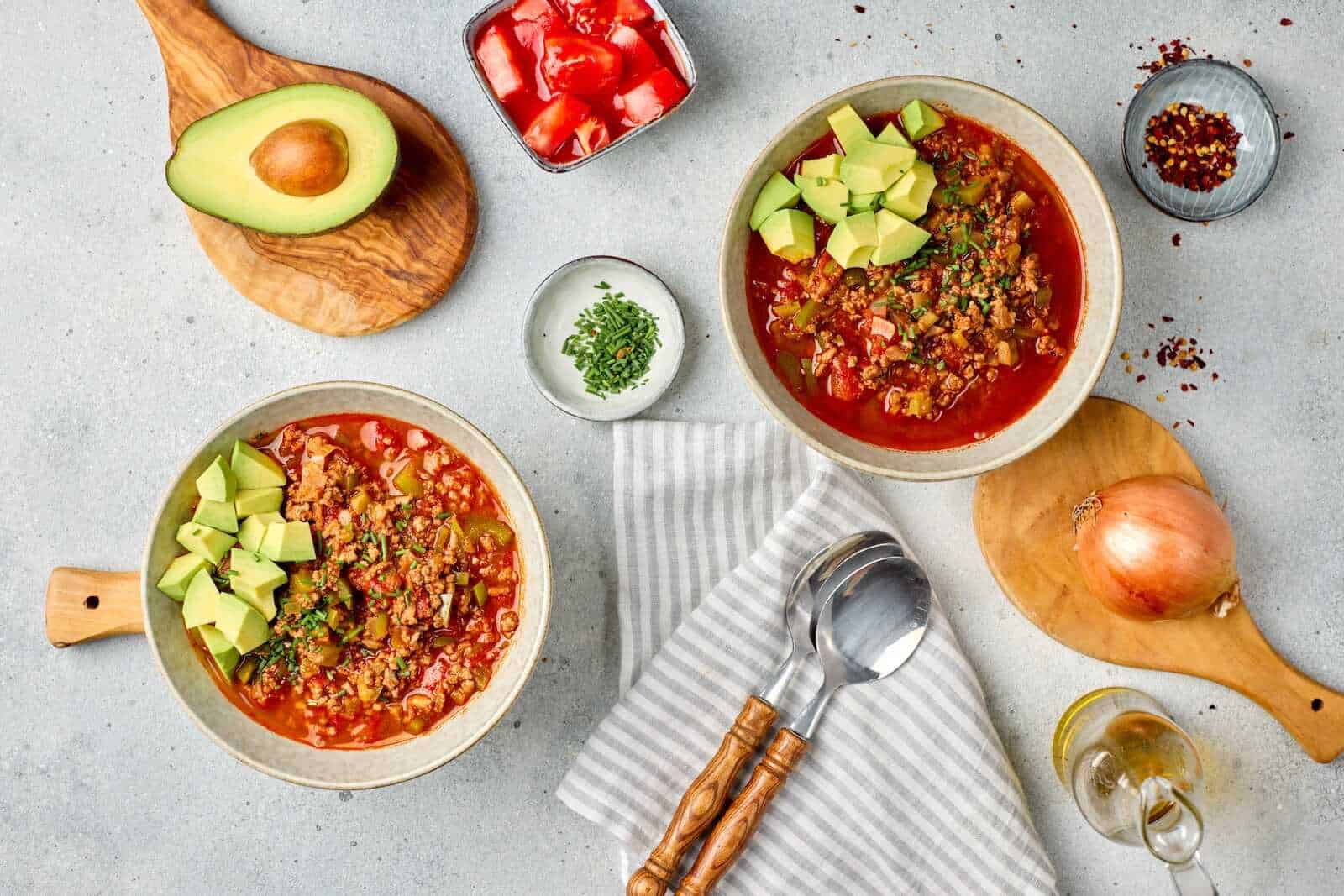
- Avocado chunks, for serving
Meat:
- 1 lb ground beef
Spices & Seasoning:
- 2 tbsp chili powder
- 1 tsp ground cumin
- 1 tsp smoked paprika
- 1/2 tsp dried oregano
- 1/2 tsp cayenne pepper
- 1 tsp salt
- 1/2 tsp black pepper
Soup Base:
- 1 tbsp olive oil
- 1 can (28 oz) crushed tomatoes
- 2 cups beef broth (or chicken broth)

Step-by-Step Cooking Instructions
Here is how I prepare this chili. You can follow along, and I’ll include tips to optimize for freezing, reheating, and postpartum meal planning.

Heat the Oil and Sauté Aromatics
In a large heavy pot (or Dutch oven) over medium to medium-low heat, warm the olive oil. Add the diced onion, celery, and minced garlic. Sauté until the onion becomes translucent and the celery softens, about 3–5 minutes.

Add the Beef and Brown
Crumble in the grass-fed ground beef. Break it up with your spoon or spatula and stir as it cooks. Make sure all sides contact heat, letting bits brown (don’t overcrowd). Cook until there is no visible pink, about 5–7 minutes.


Stir in Spices
Add the chili powder, smoked paprika, oregano, cayenne, cumin, salt, and black pepper. Stir well so that the meat and aromatics are coated with the spice blend. Cook another 1–2 minutes to “wake up” the spices (you’ll smell the fragrance).


Add Crushed Tomatoes, Broth and Bell Pepper
Pour in the crushed tomatoes and bone broth. Add the chopped green bell pepper. Stir everything together. Raise heat to bring it to a gentle boil.

Simmer
Once boiling, reduce heat to low, cover the pot, and let it simmer for 20 to 30 minutes, stirring occasionally so it doesn’t scorch. The flavors will meld, the liquid will reduce slightly, and everything softens.
Finish and Adjust Flavoring
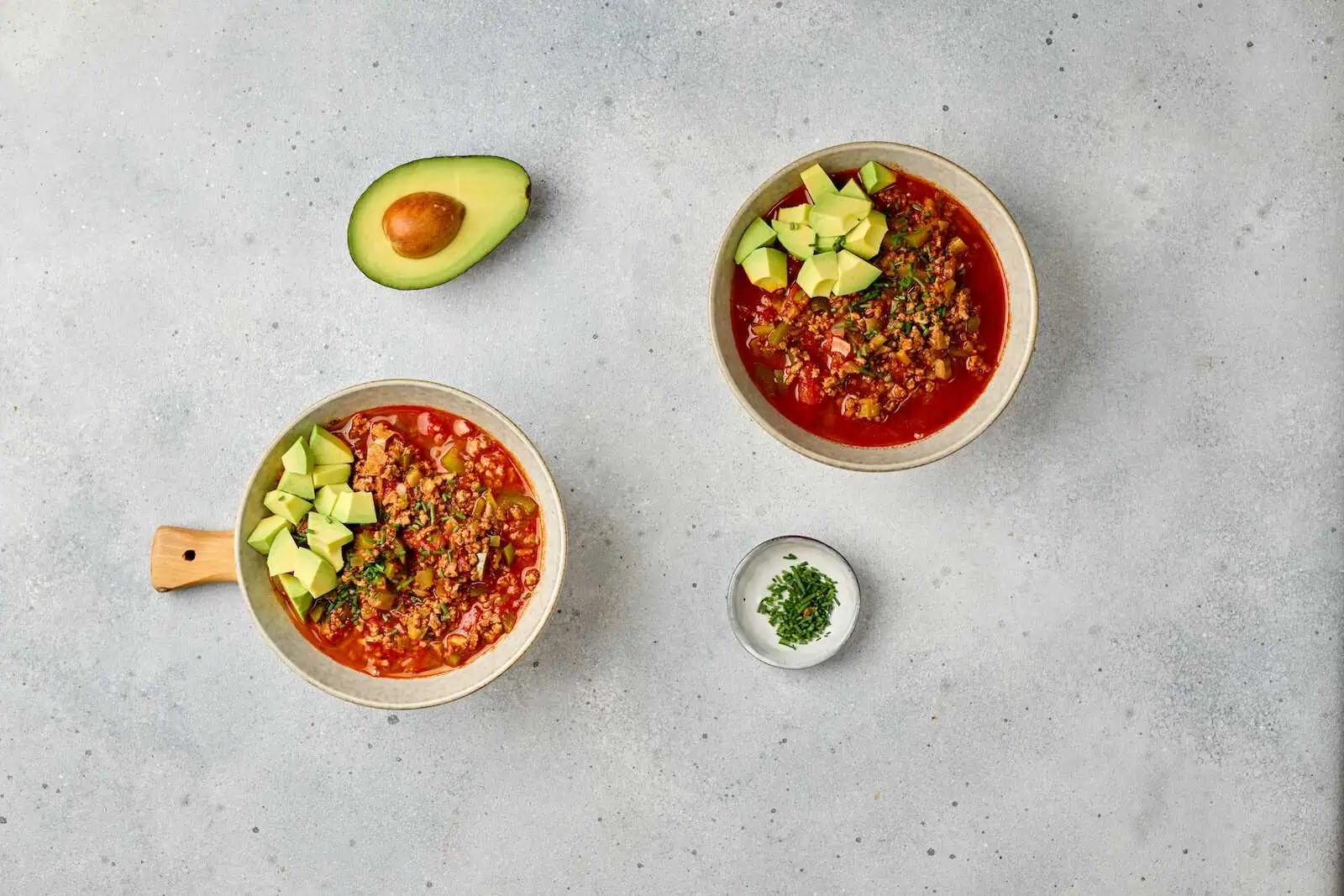
Taste and adjust salt, pepper, or spice level. If it’s too thick, add water or extra broth; if too thin, simmer uncovered for a few more minutes. Stir in the chopped green onions just before serving or before portioning to freeze.

Portion and Freeze
Let the chili cool somewhat (but not fully to room temp) before transferring to freezer-safe containers or heavy freezer bags. Label with date and contents. Leave a little headspace since liquids expand when frozen.

Reheat and Serve
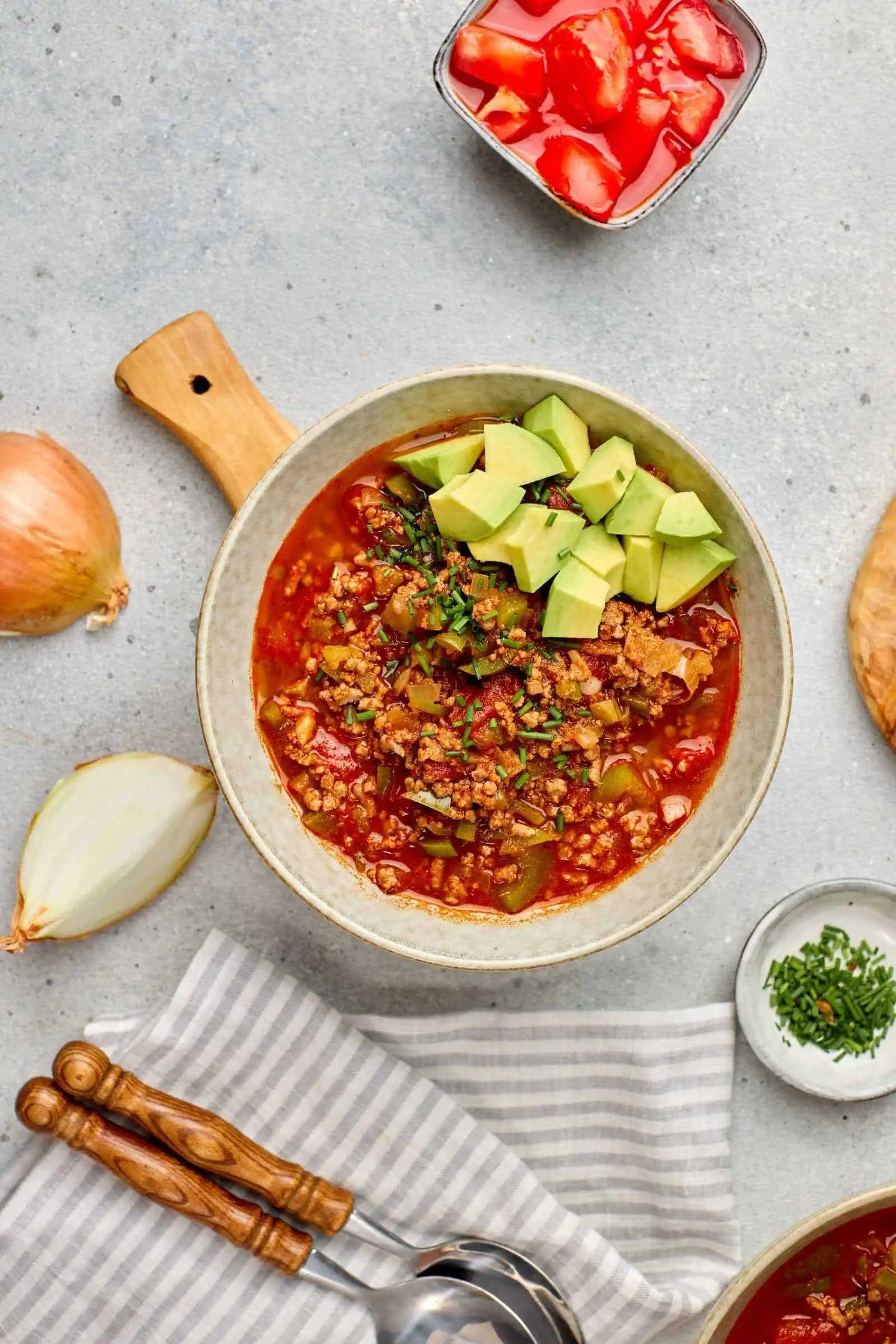
When ready, thaw overnight in the fridge (or use the defrost setting). Reheat on the stove over low/medium heat, stirring and adding a splash of broth or water if necessary. Serve with avocado chunks or your preferred toppings.

Batch Cooking- Tips & Best Practices
Here are some strategies I use when making this chili as part of postpartum meal prep:
Choose Your Container System
- Freezer-safe plastic containers (BPA-free) or glass containers with airtight lids
- Heavy-duty freezer bags (push flat to freeze)
- Mason jars (leave headspace) if small amounts
I like to portion into 2-cup or 3-cup servings for single days and 4-cup for family meals.
Cooling Before Freezing
Let the chili cool for 15–20 minutes uncovered (on the counter) so it doesn’t steam and rush into the freezer, but don’t leave it out too long (max 1 hour) to avoid food safety issues. Then cover and transfer.
Labeling
Use masking tape or freezer labels. Write the date, recipe name, and reheating instructions (e.g. “Thaw overnight, reheat on stovetop 8–10 min”).
Lay Flat
If using freezer bags, lay them flat in a single layer until frozen solid. This saves space and makes stacking easier.
Thawing
Best is overnight in the fridge. If you’re short on time, you can do a warm (not hot) water bath with the sealed bag, or defrost gently in a microwave (if container allows) before finishing on the stove.
Reheating
Gently reheat on the stovetop over low to medium heat, stirring occasionally. Add a splash of water or broth if the chili seems too thick. Avoid high heat that could scorch.
Rotation
Use the “first in, first out” (FIFO) principle. Eat the oldest batches first. I recommend consuming chili within 3–4 months for best flavor and safety, though most will use it long before that.


Nutritional and Postpartum Recovery Considerations
When you’re postpartum, your body is doing a lot of heavy lifting—healing, restoring hormones, adjusting metabolism, and (if nursing) producing milk. Here’s how this chili supports that:
Protein and Tissue Repair
The beef provides essential amino acids your body uses to repair tissues (uterus, perineum, C-section scar, etc.). If you’re nursing, that protein also supports milk production.
Healthy Fat
Olive oil and the natural fat in grass-fed beef supply calories and fat-soluble vitamins (A, D, E, K), supporting hormonal balance, brain health, and sustained energy.
Fiber and Digestion
Celery, bell pepper, onion, and optional greens contribute fiber, which helps prevent postpartum constipation (common due to reduced mobility, pain medication, and hormonal shifts).
Micronutrients
- Iron: especially important if blood loss was substantial.
- Zinc, selenium, B vitamins: all support energy metabolism, immune function, and healing.
- Antioxidants: tomatoes, bell pepper, garlic and spices provide vitamin C, carotenoids, and polyphenols that combat oxidative stress.
Blood Sugar Balance
By having a base of protein + veggies + fat (rather than too many starchy carbs), the chili helps minimize spikes and crashes in blood sugar, which is vital when you’re waking up frequently, hormone fluctuations abound, and energy is in flux.
Hydration
Bone broth adds liquid and minerals (electrolytes) which help with hydration. Especially if nursing, staying well hydrated is essential.
Calorie “Buffer”
Because cooking postpartum often means irregular schedules and unknown appetite, having a prepared calorie-rich (but balanced) meal helps avoid under-eating—something many new moms fall into.
Comfort and Morale
It’s emotionally soothing to eat something warm, flavorful, and nourishing. Less time in the kitchen means more time to rest, bond, and adapt.


Variations and Serving Suggestions
Variations to Try
- Add beans: kidney beans, black beans, or pinto beans (rinse first) can boost fiber and volume—if your digestion tolerates them.
- Veggie boost: toss in zucchini, carrots, mushrooms, or corn.
- Spice spectrum: if you like heat, add jalapeño, chipotle, or extra cayenne. If you prefer mild, reduce cayenne and maybe leave it out.
- Swap liquids: instead of bone broth, you could use chicken broth, vegetable broth, or even a splash of beer (if you’re not lactating).
- Make a slow cooker / Instant Pot version: Brown ingredients first, then transfer to the slow cooker and cook 4–6 hours low or 2–3 hours high. In Instant Pot, use sauté then pressure cook 10 minutes plus a natural release.
- Add a finishing splash: drizzle lime juice, chopped cilantro, a dollop of yogurt, or grated cheese (if tolerated) when serving.
- Serve over grains or alternative bases: brown rice, quinoa, cauliflower rice, or sweet potato mash.
Serving Ideas
- With avocado chunks (healthy fat, creamy texture)
- Over steamed greens or sautéed kale
- Topped with chopped green onions, cilantro, or fresh lime wedge
- With a side salad (greens, cucumber, tomato, vinaigrette)
- With warm corn tortillas, homemade tortilla chips, or low-carb wraps
- Sprinkle with pumpkin seeds (pepitas) or crushed tortilla chips for crunch

In Conclusion
Postpartum life is a season of both joy and adjustment, and the last thing you need is the added stress of wondering what’s for dinner. By preparing freezer-friendly meals like this nourishing beef chili, you give yourself the gift of time, energy, and peace of mind. It’s warm, hearty, and packed with nutrients to support healing and milk production—while also being simple enough to reheat when you’re juggling newborn care. Whether you enjoy it with avocado, over a bed of greens, or alongside warm tortillas, this chili is more than just a meal—it’s a comforting reminder that caring for yourself is just as important as caring for your little one.

See More of Our Postpartum Meal Prep Recipes:
- Freezer-Friendly Chicken Enchiladas – Meal Prepping for Postpartum Moms
- Cinnamon Apple Oatmeal Cups Recipe
- Lactation Cookie Recipes to Boost Your Breastfeeding Milk Supply